MARKET FUNDAMENTALS ·16 AUGUST 2026 ·8 MIN READ
Negative prices: why the market sometimes pays you to take its power.
A price below zero sounds like a malfunction. It is the market working exactly as designed — and the clearest signal of where value in the power system is migrating.
A price below zero is not a glitch
In 2024 the European Union recorded 4,838 hours of negative electricity prices — nearly double the year before. In 2025 the record fell again: Germany alone printed 576 negative hours by the end of October, with Sweden, the Netherlands, Spain and France all clearing 500. For a few hundred hours a year, in the middle of sunny days, the wholesale market now pays consumers to take electricity away.
Wholesale electricity is priced by merit order. Every generator offers into the day-ahead auction at its short-run cost; the grid dispatches the cheapest first and climbs the stack until demand is met. The last unit needed sets a single clearing price that everyone receives — pay-as-cleared, one price for all.
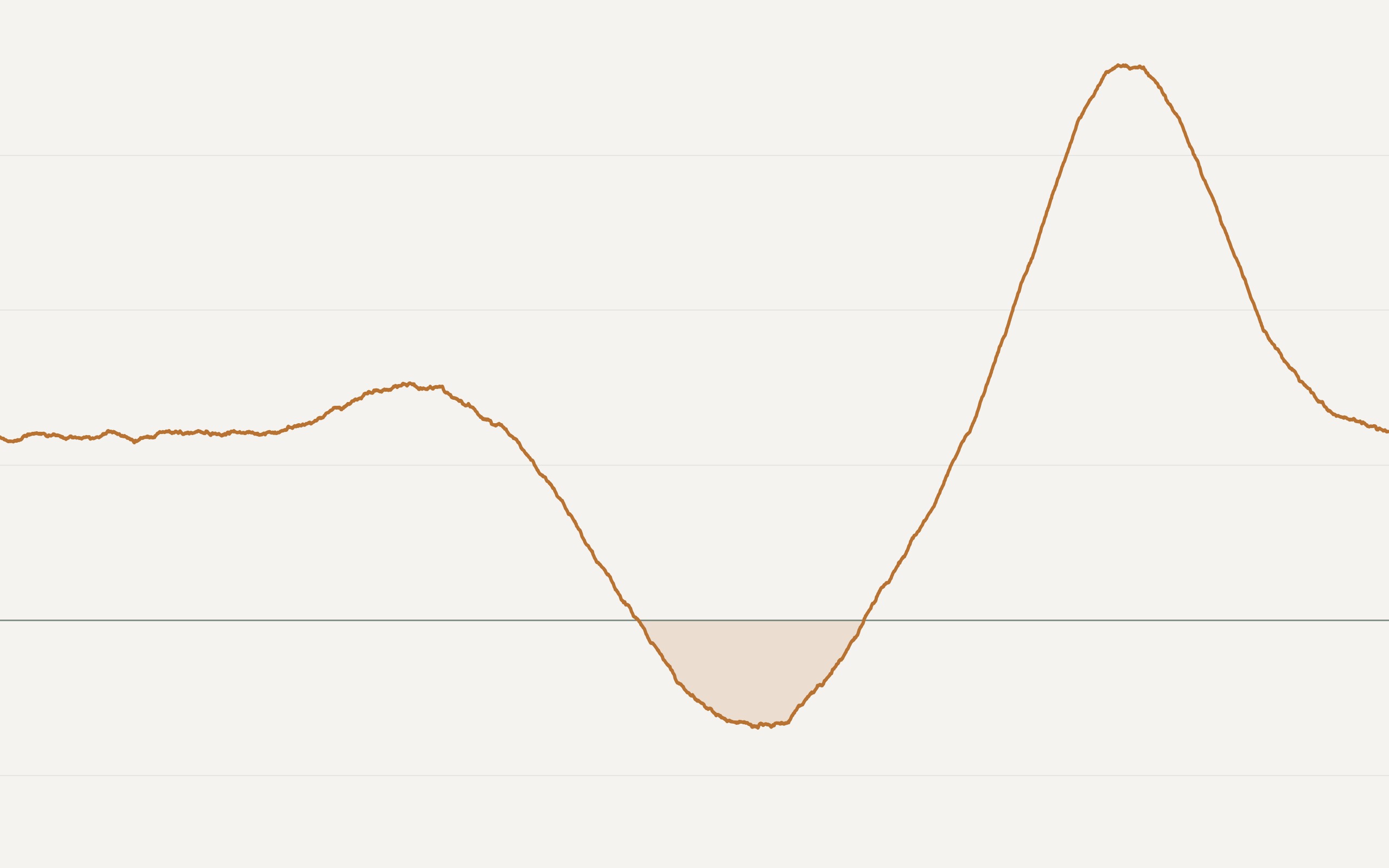
This mechanism has an unusual property: the price tracks scarcity, not average cost. When the marginal unit is a gas plant, a 90%-renewable hour still prints a gas-linked price. And when there is no marginal unit at all — when zero-cost supply exceeds demand — the auction has to find a price low enough to persuade someone to switch off, or someone else to consume more. Sometimes that price is below zero. Producers, in that hour, are paying the market to stay online. Buyers are being paid to take delivery.
Electricity cannot be warehoused on the wire — it is used the instant it is made, and the grid must balance supply and demand every second. When supply floods in faster than demand can absorb it, and enough of that supply refuses to switch off, a negative price is simply what equilibrium looks like.
Why anyone would pay to keep generating
The obvious question: why would a rational generator run at a loss rather than shut down? Three reasons, and each is structural rather than foolish.
The first is inflexibility. A nuclear plant or a lignite unit cannot ramp off for two hours at lunch and back on for dinner — cycling costs, thermal stress and restart times mean it can be cheaper to sell a few hours at −€20 than to shut down and restart. The plant is not making a mistake; it is choosing the smaller loss.
The second is subsidy design. A generator receiving a fixed feed-in premium per MWh produced still earns its support payment when the market price is negative — so it keeps producing as long as the subsidy exceeds the negative price. Newer support schemes suspend payment during negative hours precisely to fix this, but a large installed base still runs on the old rules.
The third — and now the dominant one — is that solar has no operator watching each panel. Millions of small rooftop systems produce whenever the sun shines, with no price signal reaching them at all. They cannot bid, and they cannot curtail. In an afternoon of strong sun and soft demand, that silent, unpriced supply is what pushes the stack below zero.
The solar engine behind the surge
Negative prices existed before solar, but they were rare — a windy night in Denmark, a spring flood in the Nordics. What changed the frequency is that solar output is concentrated into the same few midday hours everywhere at once.
This is the cannibalisation problem: every added panel depresses the price in exactly the hours solar produces. German solar captured just 59% of the baseload price in 2024 — the lowest capture rate in Europe — and the mechanism is self-reinforcing. The more solar on the system, the deeper the midday trough, the less each new panel earns, and the more often the trough goes below zero.
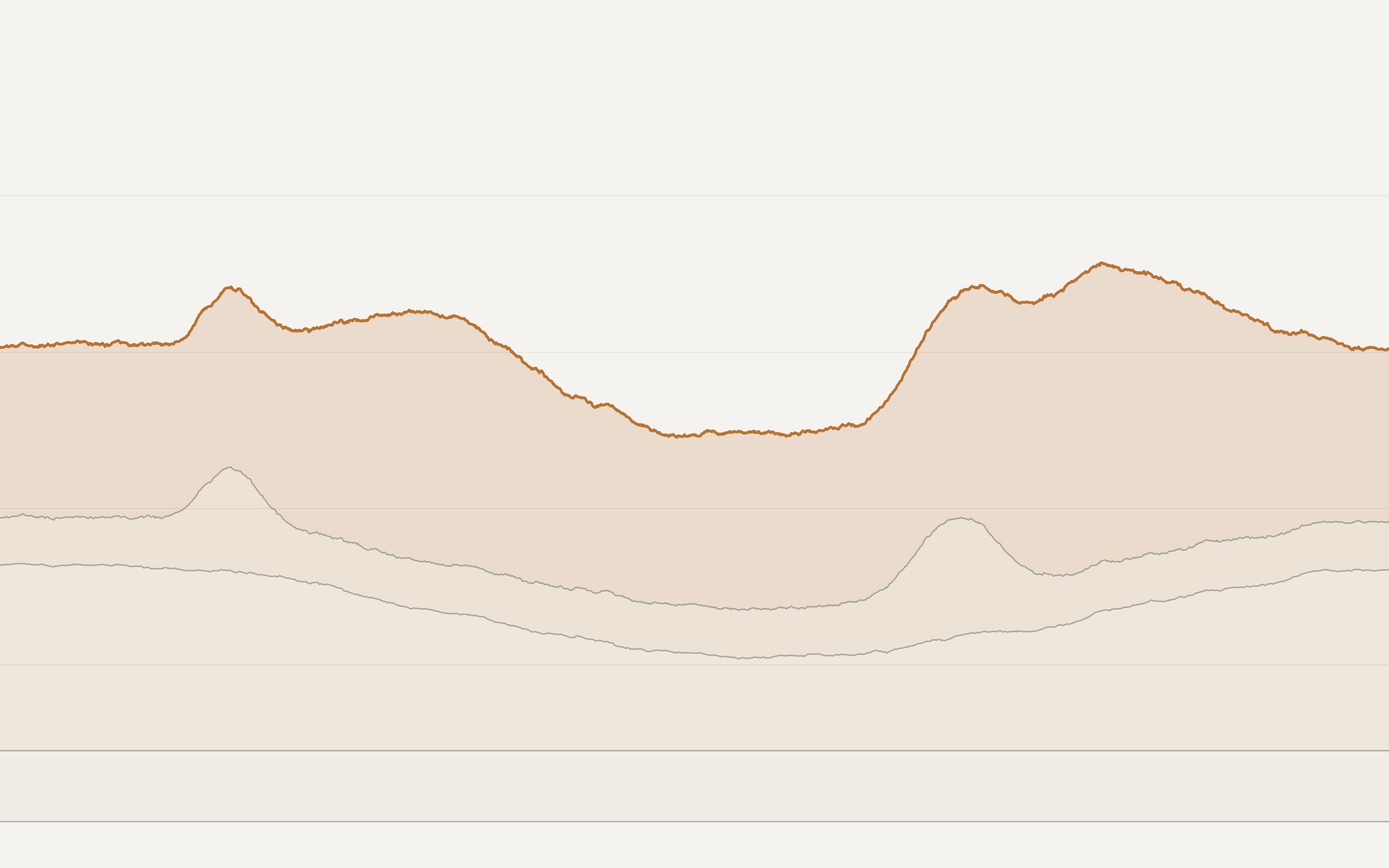
We watch this dynamic from a market where it arrived late and fast. In Latvia, solar was around one percent of generation as recently as 2024. By the summer of 2026 it was supplying 40–59% of domestic generation in the sunniest months — the single largest source in the mix. Latvia has not yet printed the volume of negative hours that Germany or the Netherlands have — the system is smaller, more import-dependent, and hydro absorbs part of the swing — but the direction is identical, and the midday trough deepens every summer that panels are added.
AVERAGE SUMMER DAY · LATVIA
The trough is what pays for the peak
≈ €33/MWh
Midday, when solar covers most of domestic generation.
≈ €184/MWh
Evening ramp, hours after the panels stop producing.
Who gets paid to absorb the surplus
Every negative hour is a transfer. Someone pays — the inflexible generator, the subsidised producer, the unhedged solar portfolio selling at −€15. And someone is paid. The question that matters for anyone allocating capital is: who is on the receiving side?
The answer is anyone who can consume flexibly, at scale, on command. Pumped hydro fills its reservoir. Electrolysers and heat storage take what they can. But the asset purpose-built for this trade is the grid-scale battery, and it collects twice.
The first payment is the arbitrage itself. A battery charging at a negative price is being paid to fill up — it buys energy at less than zero and sells it back into the evening ramp. The charge leg of the trade, normally a cost, becomes revenue. What threatens an unhedged solar producer is, for a battery, a paid opportunity to charge.
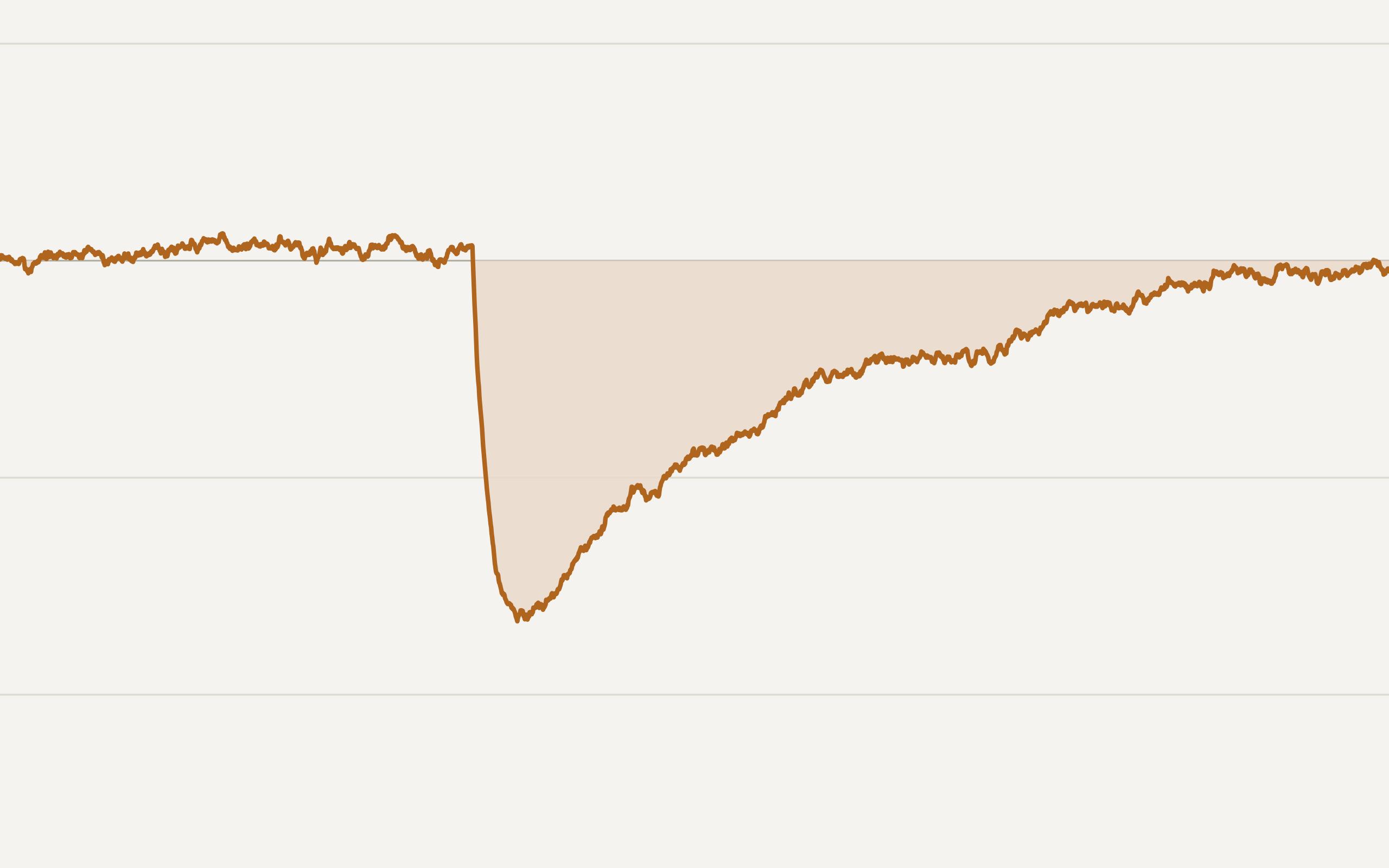
The second payment comes through the balancing market, and it is less widely understood. Transmission system operators pay for downward regulation — absorbing surplus power in seconds when the grid runs long. A battery activated downward is again being paid to charge, this time at the balancing energy price rather than the wholesale price. In thin markets these activation prices can spike to extremes; in the Baltic balancing market, energy prices have reached ±€10,000/MWh.
This is why we describe a battery's real product as speed rather than stored energy. The value is not the MWh sitting in the cells; it is the ability to swing from absorbing to injecting in milliseconds, exactly when one side of the market is desperate.
PAYS
Inflexible thermal
Cheaper to sell at −€20 than to cycle off and restart.
Subsidised producer
Keeps running while the fixed premium exceeds the negative price.
Unhedged solar
Millions of panels with no price signal and no ability to curtail.
IS PAID
Grid-scale battery
The charge leg becomes revenue — paid to fill up before the evening ramp.
Downward balancing
The TSO pays again to absorb surplus power within seconds.
Flexible demand
Pumped hydro, electrolysers and heat storage take what they can.
What negative prices do to the shape of the day
Step back from the individual hours and look at what they do to the curve. Negative and near-zero middays do not lower the average price much — they widen the spread between the cheapest and most expensive hours of the same day. And the spread, not the average, is what flexibility earns.
In Latvia the within-day spread has run between €72 and €155/MWh across the last ten months, averaging about €117. Even the softest month held above €70, and both tails of the year contribute: winter demand peaks stretch the top of the curve, summer solar troughs drop the bottom. Wide spreads persist across seasons because the two causes alternate.
There is a broader point here about how value migrates in a renewable system. As zero-cost energy floods the middle of the day, the price of energy falls — but the price of shifting energy in time rises. Producing a MWh becomes ever less remarkable; moving it from 13:00 to 19:00 becomes the scarce service. That, in one sentence, is the structural bet under everything we build.
LATVIA · WITHIN-DAY SPREAD
€72–155/MWh
Over the last ten months, averaging about €117 — even the softest month held above €70.
What we take from it
Negative prices are not going away. They will spread eastward and multiply as solar builds out, following the same path in every market: first a curiosity, then a summer regularity, then a design constraint the whole system prices around. Support schemes will adapt, some inflexible plant will retire, large consumers will learn to chase cheap hours — but the physics of a solar-heavy grid guarantees the midday surplus persists.
For an unhedged generator, every one of those hours is a small tax. For a flexible asset, every one is an invitation. When we underwrite a battery, we do not treat negative and near-zero hours as a risk to model around — they are part of the revenue engine: cheap or paid charging on one side of the spread, scarcity pricing on the other, and balancing markets that pay a second time for the same flexibility.
IN ONE PARAGRAPH
The market is not broken when it prints a price below zero. It is telling you, as clearly as a market can, what it no longer values — and what it will pay a premium for. The premium is flexibility. We build what supplies it.
Sources and further reading: EU negative-price statistics via the European Commission and pv magazine (“Europe faces surge in negative power prices as solar output grows”, Nov 2025); Bloomberg, “Europe Saw Record Surge in Negative Power Prices in 2025” (Jan 2026); Latvian price and generation data from ENTSO-E / Nord Pool via energy-charts.info; German solar capture rates per 2024 market data.
This article is general market explanation and does not constitute investment advice or an offer of securities.